Traditional Composite Bow Guide: Types, Price & How to Choose
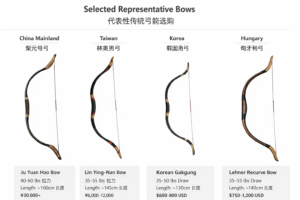

Traditional Composite Bow Guide: Structure, Types & Buying Advice
Traditional composite bows are advanced archery tools made from horn, sinew, and wood.
They offer superior energy storage and efficiency compared to simple wooden bows.
What is a Composite Bow?
A composite bow uses multiple materials to optimize tension and compression:
sinew handles tension, horn handles compression, and wood provides structure.
Types of Traditional Bows
Chinese Manchu Bow
Long, stable, designed for heavy arrows and maximum penetration.
Korean Gakgung
Short and extremely efficient, known for high performance.
Hungarian Recurve Bow
Balanced design, commonly used for horseback archery.
Taiwanese Composite Bow
Modern improvements on traditional designs, offering better durability and usability.
Best Bowyers and Regions
- China – Heritage bow makers
- Taiwan – Practical custom bowyers
- Korea – Standardized traditional bow makers
- Hungary – European recurve bow makers
Price Guide
| Level | Price | Description |
|---|---|---|
| Entry | $100–300 | Beginner bows |
| Intermediate | $300–1000 | Best value |
| Advanced | $1000–3000 | High performance |
| Collector | $3000+ | Traditional craftsmanship |
How to Choose the Right Bow
- Beginners → Fiberglass bows
- Intermediate → Laminated bows
- Advanced → Composite bows
- Collectors → Horn bows
Key Buying Tips
- Start with lower draw weight (30–40 lbs)
- Avoid horn bows as a beginner
- Consider climate (humidity affects performance)
Conclusion
Traditional bows combine history, engineering, and performance.
Choosing the right bow depends on your purpose: training, shooting, or collecting.
Categories: Archery Worldwide, Chinese Traditional Archery
You must be logged in to post a comment.